My name is Jamie Case and I love coffee. Most of all though, I love sharing coffee with others. Coffee to me tastes best when it’s shared with a group of friends. So naturally I want to bring the maybe more detailed parts of coffee to as many people as possible. So I’ll start this by giving a brief idea of what a process is and the role it plays in creating the flavours we taste in our cups.
So, what is a process? It’s the method used to remove the layers of “skin” that surround the coffee bean. There are many ways this can be achieved, but we’ll mostly be focusing on the four involved in this little experiment we have for today.
The most common processes are washed and natural. Washed, likely being the most popular (at least in my experience) creates a consistent flavour, relying heavily on the flavours of the bean alone, but in my personal experience can be a little boring. Not bad at all, but I enjoy the weird and wonderful that it can lack. Natural offers exactly this, letting the coffees develop a more unique flavour, by drying the beans as they come, skin, fruit, the whole shebang.
More experimental methods. Honey processing offers a balance between the two, leaving the sticky honey-like mucilage for the fermentation process after they’ve been depulped. There are also some more experimental methods out there, fermenting the beans with different fruits. Special shout out to the true mad scientists of coffee creating unique experiences with fruit fermentation processes eg Jairo Arcila.
Finally we’re going to talk about kopi luwak. Here the coffee has been partially digested by most commonly wild Civet cats, the beans are affected by an enzyme in the cats that develop a unique taste. Unfortunately this causes a whole host of concerns with animal well-being. The cats are often kept in horrible conditions, cages that are too small, wire mesh floors, and a lack of enrichment which has led to many captive cats self mutilating in an attempt to cope psychologically . So here in our case steps in Rani Mayasari. Her and her team have developed their own method to create a fully synthetic kopi luwak by isolating the enzymes in question, and fermenting the coffee beans with them. So we have a completely cruelty free cup of coffee on our hands.
The experiment. One bean, four processes.
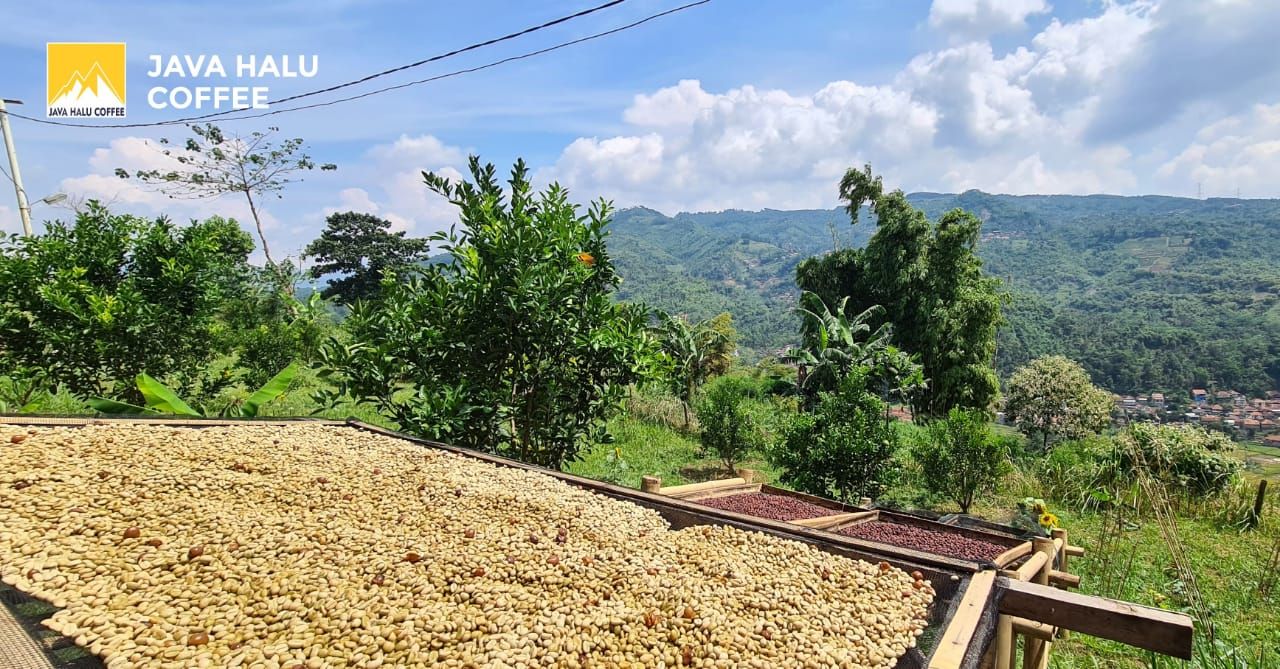
The coffee used in this experiment is from the Java Halu farm in Indonesia. The processor, Rani Mayasari, is brilliant at what she does, and stands for positive changes in the industry, and the roaster we’re using is Skylark coffee, a non profit specialty roaster based in Brighton, UK. The method we’ll be using is v60’s, all made by one experienced barista and my good friend Jimmy. Next up was the order. I was torn here, I knew that the double wash would be the “safest” coffee of them all based on the process and label, however, it felt right that we start with the natural, as it represents the unaltered essence of the coffee plant. So it became natural, double wash, black honey, and finally the most experimental one, kopi luwak.
Natural
Tasting notes: tropical fruit juice.
This was such a strong start to the experiment. Looking back I honestly wish I had gone for the double wash to start, because this was always going to be hard to top, it was a very special coffee. I think the best way I can describe it was juicy. It was packed full of flavour, with such a beautiful aftertaste that it was sad to eventually wash away.
Double washed
Tasting notes: cranberry, molasses.
I’ll start by saying, this was a very good coffee. To call it anything else would be a discredit to it, however, it was also … boring? It tasted like, well, coffee. The standard nutty and bitter yet sweet taste that has become the staple of the industry. Maybe another method of brewing would bring out the flavours more, as v60’s are inherently a delicate method. But we are judging this solely on the one method for the sake of fairness.
Black honey
Tasting notes: green apple, pear, Brazil nut.
I had high hopes for this one, as after the natural I thought this was going to be another cup bursting with juicy goodness. It may not have lived up to what the natural process managed to create, but it was still a much more complex palate than the washed beans managed. This was however a very well balanced coffee, perfect for people that maybe enjoy your standard coffee flavours but are looking for that little bit more character.
Kopi Luwak
Tasting notes: Papaya, watermelon, coffee blossom.
WOW. This was an incredibly unique tasting experience. I’ve been blessed (and cursed) with trying some very out there coffees, thank you Jairo Arcilla. But this may have been the cup with the most complexity, it had so much going on for me, almost like a roller coaster ride, it started really pronounced, likely the papaya? Then it dipped into a lull for just a moment, before leaving you with an amazing aftertaste that lingered possibly longer than any coffee I’ve had before. It was an incredible cup of coffee that displayed everything I love about the drink, the ever changing taste that comes from each sip.
Ranking
Now, I’m not the greatest yet and communicating and identifying individual flavours, and I certainly don’t think of myself as such an authority that I can give these coffees a numeric score. So for now we’ll go with just ranking where I place each of these compared to the other. In last place unsurprisingly the double washed. It just didn’t have enough about it to warrant a higher place in the list. Next up we have the black honey, here the personality begins to shine through, and we get a balanced mix of the coffee like nuttiness, with the more refreshing fruitiness. Now for the big bit, the top two. This was an INCREDIBLY hard decision to make. Both brought so much to the table, but in the end I chose … the kopi luwak. Now I know that after everything I’ve said about it being the uniqueness of coffees that I love the most, it may be surprising to have the most intricate not be the top choice, and honestly, against almost any other coffee out there I would back this at least put up a very good fight, but there was just something so special about the natural. I kept telling myself that I’d only have it every other night, so that I can savour it, but each evening as I went to weigh out some beans, it magically appeared in my hand once again. That’s just not something I can ignore.
Final thoughts
This was a really fun experiment for me, and I would encourage everyone to go and try it for yourselves, it will only expand your views and understanding of what coffee is. Please go and check out the Rani, the work she does, and the people she helps. The same goes for Skylark, possibly being the only specialty roasters in the world that are completely non profit. The industry can never have enough helping hands and kind hearts.



 acaseforcoffee