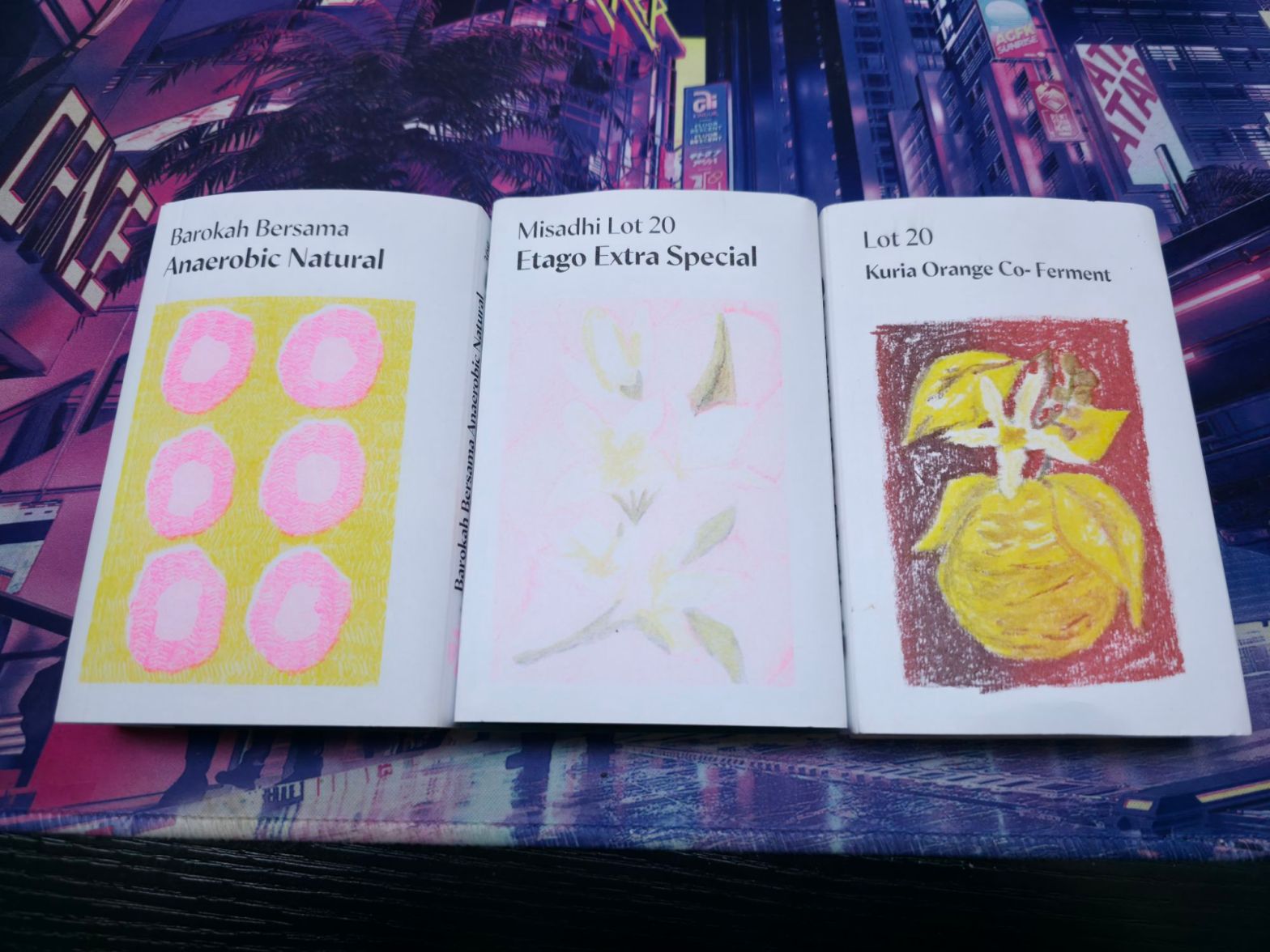
I started this journey talking about the difference a process can make on a cup of coffee. We built solid foundations explaining the big three processing methods that are used all the time in the industry and even began to explore the more … experimental methods, with Rani Mayasari’s synthetic Kopi Luwak. But that was just a glimpse into the weird and wonderful world of coffee production. Across the world there are coffee producers with their white lab coats, living the life of mad-scientists, creating flavours and intensity that could seldom be reproduced by conventional methods, and these are exactly my favourite kind of people!
Fruit co-fermentation
I was first introduced to the wild world of Jairo Arcila around a year ago now. A retired producer that now seems to have taken on that role of mad-scientist, fermenting his now smaller lots of coffee with almost anything you can think of, I personally have tried wine yeast, peach, apple cider, blackberries, passion fruit, champagne yeast, and strawberry. All with varying degrees of success, but what I love is that he never lets it stop him. From the Strawberry having an overpowering aroma of gravy, to one of my favourite coffee yet coming from the peach co-ferment. This practice became known as fruit co-fermentation, and is one that can definitely push the boundaries of what people consider desirable in coffee. Sometimes the process can overpower the natural flavours of the coffee, for example the blackberry co-ferment we had tasted exactly like warm ribena, but when a balance is found it can create a beautifully unforgettable cup of coffee. It’s from his work that my interest in co-ferments began, and now it’s always something I keep an eye out for! Oh to be sat on a farm in Colombia, spending your days under a warm sun, creating unforgettable coffees.
Now I’m not saying Jairo started the trend, but I’d certainly class him as a pioneer of it, and other producers have been taking note. I’m beginning to see more and more co-ferments crop up, from all over the world, with the latest I’ve tried being an orange co-ferment from Kenya, a much more subtle result than Jairo’s works, but none the less a gorgeous cup of coffee, offering just that little bit of orange zest. Seeing these more unusual methods being accepted and embraced across continents is exactly what the industry needs to keep growing, both in quality, and creativity. But where does it cross the line between being effective, to being a fad? I’m currently resting perhaps the most outlandish sounding one I’ve been able to try yet, a fungi inoculated co-ferment, once again from Kenya. With surprisingly sweet tasting notes, instead of the earthier tones I’d have expected, adding to the intrigue! With more and more new processing methods being boasted each week, only time will tell which offers enough to last, and which will be forgotten by history.
It’s not all about fruit
As well as co-ferments, we’ve been seeing a rise in anaerobic fermentation, a method in which the coffee is sealed in tanks, with the oxygen removed. With valves to allow the built up CO2 to filter out, you reduce the risk of getting that over-fermented taste, while giving the coffee time to develop some intense, often fruity, flavours. I’m all here for methods that can take the best parts of a natural process while removing the risk of an unpleasant cup of coffee. That being said there is a washed version of this process where the mucilage is removed before washing the beans as well, for those that prefer the cleaner finish.
To avoid overloading you with the many, many, processing methods being explored out there right now I’ll only talk about one more; carbonic maceration. This is a method that stuck out to me as it takes inspiration from another complex yet beautiful drink; wine. Introduced to a wider audience in the 2015 world barista championships, Sasa Sestic worked with Colombian farmer Camilio Marisande, to promote fermentation in a carbon dioxide rich environment, to create complex coffees with less of a sharp acidity. Different from anaerobic fermentation as instead of releasing the built up CO2 it almost encourages it. I always appreciate people taking inspiration from one another to further push the boundaries of coffee making, so to take that from another product entirely was, well, inspired.
I think that developing processing methods is great for the long term survival of specialty coffee, allowing us more control over the flavours we present in our coffees, which I hope will mitigate the casual coffee drinkers need for syrups, and sugars, creating a pathway to the specialty market and some of the amazing coffees available the world over. As always, I encourage experimentation, go in with an open mind and try as many weird and wonderful processes as you can, if nothing else, it’ll be memorable!
On a side note, I’ll be attending a cupping session/Q&A session hosted by Skylark this week, celebrating and learning more about Ethiopian coffees, specifically from Bette Buna, a family owned coffee company known for equal opportunity employment, transparent supply chains, among other positive contributions to the coffee industry. So expect a rundown of the experience next week!





 acaseforcoffee