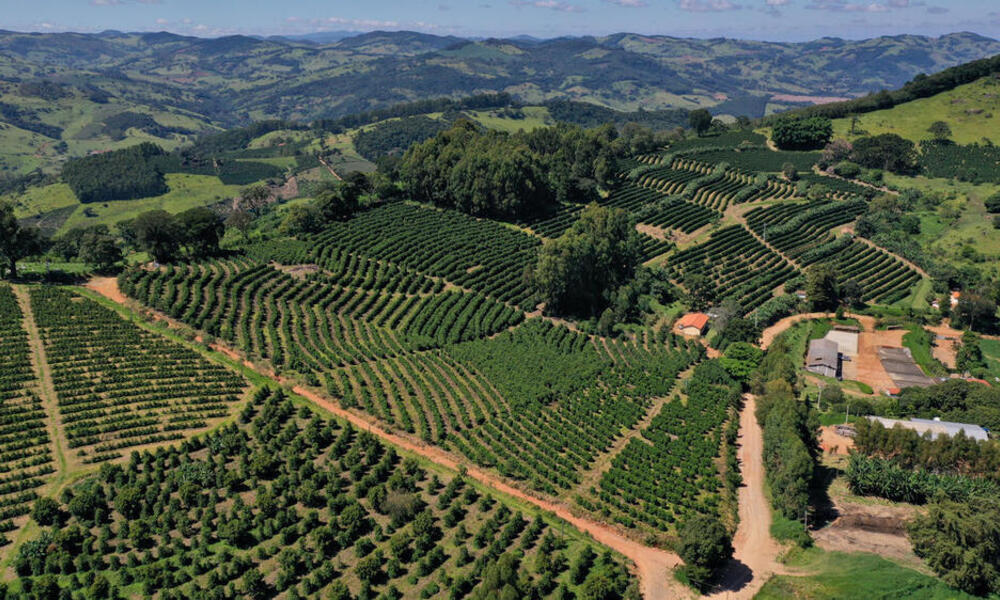
Choosing coffee is an overwhelming business for those new to the specialty coffee scene. Trying to make sense of what you’re buying with names like Gesha/Geisha, Wush Wush, and Red Bourbon being thrown around, there’s an expectation on the consumer to know what comes with each. But the fact is that without having it explained to them, they can sound like utter nonsense! You’re telling me they’re not supposed to, even for a second, wonder if their coffee tastes like a traditional Japanese hostess? Or a Kentucky Bourbon? There’s always been a disconnect between the average consumer and the coffee producers/roasters, with language expected to be understood with no explanations. That is exactly why I started this blog. So let’s get into varieties/varietals.
First up, what is a variety or varietal? The term is used to describe the specific subspecies of the coffea arabica/canephora plant being grown at any given farm. With varieties being the species, and varietal referring to a specific instance of the variety being used. Each subspecies offers vastly different natural flavours, however, there are many other factors that affect taste, including where it’s grown, altitude, soil, etc. They are however a good indicator of the potential cup quality, as well as yield and disease resistance, among other things. They are, however, a good indicator of the quality of the coffee you’re about to get your hands on. For example, Ethiopian Heirlooms: Nine times out of ten, expect to taste blueberries. Always blueberries. I’ll be using the World Coffee Research’s varieties catalogue to present the specifics of each, such as potential cup quality, lineage, and ideal conditions. This is an amazing free resource that they encourage sharing as high and wide as possible, and I’m 100% behind them.
The origins – Typica and Heirloom varieties
Starting at the beginning of the life of coffee, we have the Typica’s. This is the variety that all other varieties are derived from, making it the most impactful variety, both historically, and even today. More and more varieties are being created, all owing their lives to Typica. This is a low yield variety with a very good potential cup quality, as expected from the plant that kicked it all off. However, with the yield, high altitudes required, and high susceptibility, change was needed to solidify the future of coffee.
On a side note, Heirloom varieties are a broad term for naturally occurring wild coffee plants, often used in Ethiopian coffee. As the name suggests, it refers to older, wild subspecies that have naturally mutated from Typica, meaning it is not specifically a variety in and of themselves. Usually harvested from small family-run farms, you can see exactly why they’re considered heirlooms. They also produce some amazing cups of coffee. The average standard of Ethiopian coffee is very high, and the Heirlooms play a big part in that.

Gesha/Geisha
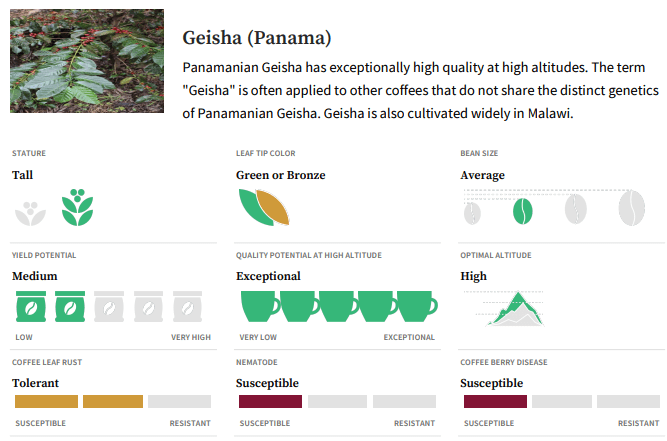
Gesha (or Geisha) is generally considered the premier variety, with extremely high cup scores across the board. The average quality of Gesha’s can and will outperform some of the highest quality examples of any other varieties. The name itself is interchangeable, with origins in a growing region in Ethiopia which translated as”Gesha”, however, it is not clear where the name “Geisha” came from, and soon became the name used by most other countries growing this variety. Panama has taken the variety and ran with it, solidifying its place at the top of the table. Interestingly they use the name Geisha.
You’ll often find them to be floral with a balanced amount of acidity. A top tier Gesha, for example Wilder Lazo’s Colombian Gesha, is used by great roasters such as Skylark, and Crankhouse coffee to create some of the most exquisite and memorable coffees you will ever have. While this coffee has amazing quality, it is a fairly low yielding plant that comes with very high cost, with an auction record £10,424.92 per KG for a Elida Aguacatillo Geisha from Panama in 2024. If you want the best, unfortunately for us consumers, we have to pay the price to match the quality.
Bourbons
The Bourbon variety is a natural mutation of Typica, and another extremely important variety in the coffee world. It can be found in the lineage of many varieties across the world, as well as producing some of the best coffees around. Initially discovered on the Island of Réunion, at the time called Bourbon, it spread across the world as it is now found on multiple continents. It comes in red, yellow, and orange varieties, as well as the rarer and brilliantly tasting pink variety, which happens to be on the list of my favourite coffees I’ve had the pleasure of tasting! With its higher yield than Typica and a very good potential quality, it has become a staple of the coffee industry, known mainly for their distinct sweetness. If you ever want to understand the effect conditions have on a coffee, try a Rwandan bourbon vs a South American. The different climates, soil, and altitude can create a stark difference in what you’re tasting. Notably the “Best of Rwanda” roasted by Taith coffee really stood out to me.

Pacamara
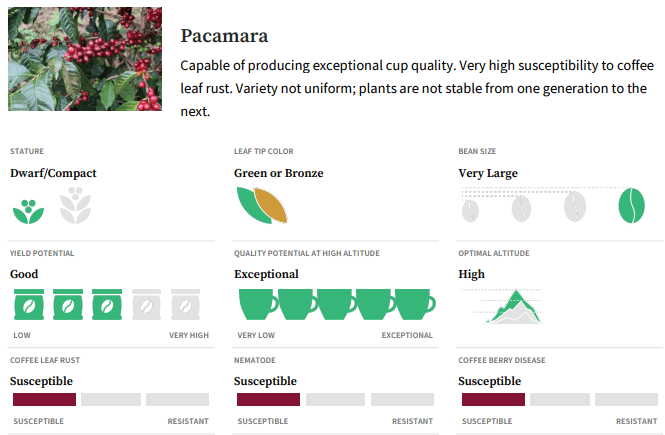
A great example of genetic tinkering creating high quality coffee is the Pacamara. A cross between the Pacas and Maragogype varieties, this coffee is a good example of the whole being greater than the sum of its parts. While both parent varieties do make good quality coffees, the Pacamara can create some incredible coffees that would be hard pushed to be matched. With a good yield and exceptional cup scores, this is one that can be considered an elite variety. Created in El Salvador by the Instituto Salvadoreño de Investigaciones del Café (ISIC), it has distinct flavours, being both chocolatey and fruity. However, there is a risk of a very herbal coffee being produced, while this is sometimes a desirable trait, I personally haven’t experienced this yet.
SL28
SL28 is another example of human invention creating an amazing variety. Created in Kenya by Scott Labs, SL28 is a drought resistant coffee plant, perfect for the coffee growing regions in places like Africa where rain is more scarce, and has less accessibility to water. This coffee is often known for its fruity notes and very high potential cup quality. I’ve come across many examples of SL28, and honestly it hasn’t disappointed thus far! As a fan of brighter and fruity coffees, it’s hard to choose a better African coffee than a Kenyan SL28, with perhaps the exception of the Ethiopian Heirlooms, and to stand equal to the powerhouse that is Ethiopian coffee is no mean feat.

Final thoughts
I would like to first once again thank and urge everyone to check out the Coffees variety catalogue created by the World Coffee Research team. It’s an amazing free resource that gives such an interactive way of learning about what we’re drinking.
Obviously this is far from an exhaustive list of the coffee varieties out there. Simply, this is an introduction to understanding what you’re buying into, both when you order a coffee at a shop, and when looking to buy some beans for home brewing. I chose to use a mix of the most important varieties both historically and genetically, alongside some of the recent coffees that have stood out to me. There are many, many, honorable mentions, from Sidra to Java, there’s no shortage of incredible coffees out there, far too many to squeeze into one post, especially when you get into all the hybrids and wild coffees of the world.
It’s important to remember that the varietal used in the coffee in front of you is only one part of the puzzle that makes up the flavour of your coffee, with everything from the process, how it’s been roasted, and even how it’s been brewed, factoring into the final product. After all, the “best” coffee in the world can be easily ruined. So go out and try as many different varieties out as you can and decide for yourself which is your favourite. I look forward to hearing which have captured your hearts.




 acaseforcoffee